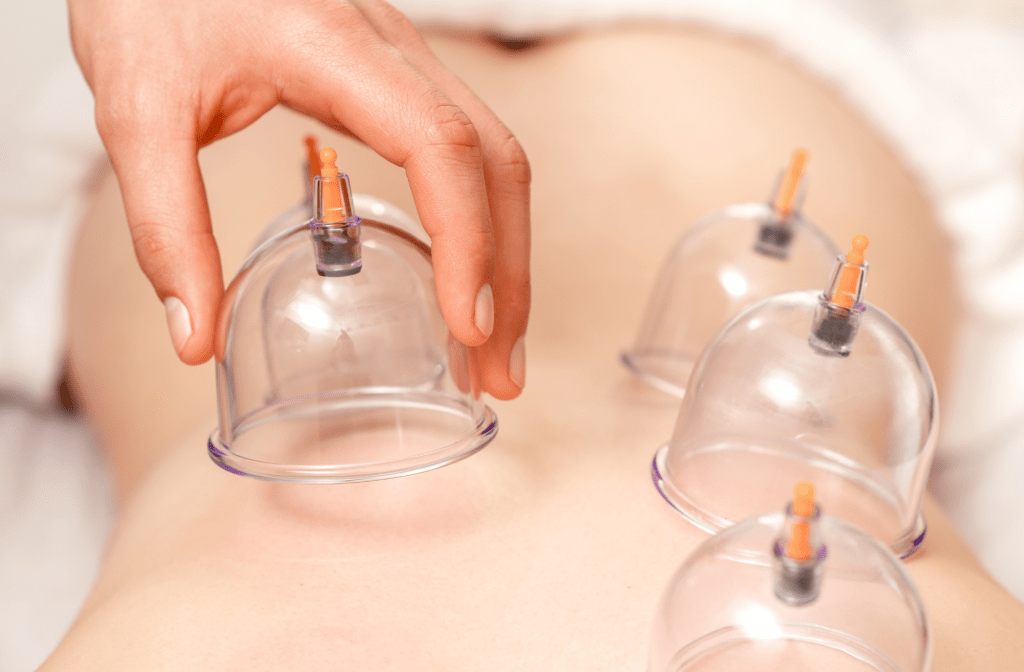
A suction-based soft-tissue technique that may be used alongside Myotherapy, Remedial Massage or therapeutic massage when appropriate.
Cupping uses specially designed cups to create suction on the skin. Therapists may use static cups or move them across selected areas as part of soft-tissue treatment.
At Muscles Care, cupping is considered in the context of your overall appointment rather than treated as a cure-all. Your therapist will ask about your health history, explain the technique and obtain consent. Cupping can leave temporary circular marks that commonly fade over several days.
If you do not want visible marks or prefer another technique, tell your therapist. Manual therapy options can be used instead.

Every person responds differently. Your therapist will tailor the session to your needs and comfort.
Your therapist will explain where cups may be placed, how the suction should feel and how long they may remain. The sensation should feel like pulling or pressure, not sharp pain.
After treatment, the skin may show circular red or purple marks. These are a common effect of suction and usually fade. Follow the therapist’s aftercare advice and contact the clinic if you have concerns.
Read feedback from clients who visit Muscles Care for pain management, movement, recovery and regular body maintenance.
Choose an appointment time online or call 0455 919 950 if you would like help selecting a therapist.
Find quick answers about bookings, health fund rebates, treatment pressure, first appointments and aftercare.
Cupping commonly leaves circular discolouration caused by suction. The marks can resemble bruising and usually fade over several days. Responses vary.
It should feel like firm pulling or pressure rather than sharp pain. Tell your therapist immediately if it feels uncomfortable.
Cupping may not be suitable over broken or infected skin, certain vascular or bleeding conditions, or when taking some medications. Provide an accurate health history and ask your healthcare professional if uncertain.
Yes, but the therapist will decide whether it is appropriate and available within the selected service and appointment time.